
Getting Down to Business: Georgia Nonprofit Agency Helps Veterans Become Their Own Bosses
By Pooler Magazine··7 min read
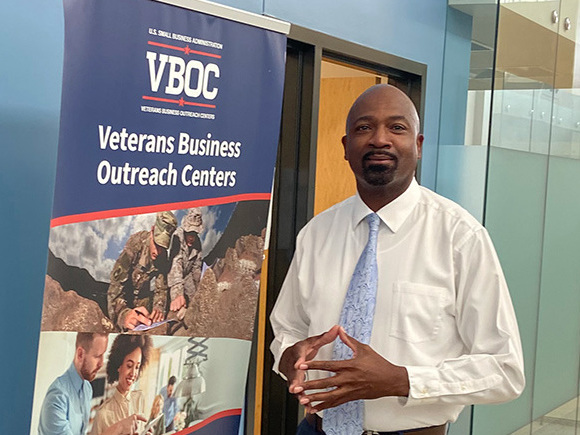
Getting Down to Business: Georgia
Nonprofit Agency Helps Veterans Become Their Own Bosses
By Stephen
Prudhomme
Ostensibly,
veterans make great business owners, possessing qualities such as leadership,
discipline, performance under pressure, willingness to sacrifice and working as
a team. Due to various economic and social challenges, however, the number of
veteran-owned businesses has dropped dramatically in the past 20 years.
In Georgia, a
nonprofit agency— Veterans Business Outreach Center (VBOC)—is helping veterans
become their own bosses and doing its part to, perhaps, return the country to
the halcyon days of post World War II for veteran-owned businesses.
Fresh off a
winning campaign, World War II veterans returned home and eventually made up
nearly half of the nation’s business owners. Veterans from Sept. 11, 2001 to
the present, numbering some 3.6 million, own only 4.5 percent of the country’s
businesses. The precipitous decline is attributed to drastic changes in the
economy and the loss of manufacturing jobs that previously served as a bridge
between the military and civilian sectors; fewer resources, such as the World
War II GI Bill that provided access to low-interest loans; and, due to the lack
of veteran owned businesses, fewer employment and networking opportunities.
Enter the
Georgia Veterans Education Career Transition Resource (VECTR) Center, which was
established by the state to help veterans and their families through career
counseling, educational coaching, and workforce training. Funded by the state,
it’s the only one of its kind in the country and attracts students worldwide
and officials from across the country interested in opening a similar facility
in their home states.
The VECTR
Center’s services include helping to translate military and civilian
transcripts toward certificates, diplomas and degrees and offering accelerated
training programs, via Central Georgia Technical College, in high-demand
careers at little or no cost for Georgia residents or those transitioning from
active duty.
Three years
ago, VBOC for Georgia and South Carolina opened in the Georgia VECTR Center and
provides one-on-one counseling, start-up assistance and Small Business
Administration (SBA) resource partner referrals for veterans seeking to get
down to the business of entrepreneurship.
Boots to Business
The director
of the VBOC is Tim Craig, who retired from the Air Force following a 20-year
career in project management and personnel administration. Craig heads up a
four-person team that visits 14 military installations in Georgia and South
Carolina on a periodic basis to teach the SBA’s Boots to Business program—free,
two-day classes on business ownership.
The classes
are divided into eight modules:
1. Military skills and how they can be
applied in the civilian sector
2. The business idea and its demand and
viability
3. Marketing and working with, among
others, government contractors
4. Profit margins
5. Legal issues and the need to set up a
business the right way by employing a banker, accountant, insurance agent and
lawyer
6. Finances, highlighting that 60 to 70
percent of the funding comes from the business owner
7. Putting a business plan on paper
8. Calling on
partners and friends to provide support in making the business successful
For the past
year or so, due to the pandemic, the classes were virtual. Starting in July,
they’ll go back to holding the classes in person. For individuals who don’t
have access to a military base, they can take Reboot classes at various
locations, one of which is at the VBOC in Warner Robins.
“We have quite
a few individuals who want to start businesses,” Craig said. “We’ve had well
over 700 calls this year. We help them understand the resources at their
disposal and not grasp at straws. We want them to know they’re not alone and
they have support.”
Through the
Central Technical College of Georgia, which serves as administrative host for
the Georgia VETRC and has 11 locations in central Georgia, veterans can take a
number of accelerated training programs that include HVAC, CDL, welding,
electrical construction, industrial management, and cybersecurity.
A Passion for Serving and Helping
Craig’s
interest in the military started in high school, after some friends joined the
Army, Navy and Marines. Six months after graduation, he decided to take a
different flight path from his buddies and signed up with the Air Force.
“I didn’t like
wearing green, I didn’t want to be on a ship, and at six-three, 140 pounds
didn’t have the body to be in the Marines,” Craig said. “The Air Force was a
great experience. I made the right choice.”
Following
retirement from the Air Force in 2003, Craig pursued a number of vocations
including owning a real estate company with his wife, mortgage financing,
teaching adult education at the Technical College System of Georgia, and
working as a substitute teacher in the Houston County School System.
In 2018, he
applied for his current position and was subsequently hired.
“I needed a
change from teaching,” Craig said. “This job allows me to use my military,
project manager and teaching skills. They’re all being employed now.”
Just as the
Air Force was a good choice, so, too, was the job of center director.
“I have a
passion for serving and helping,” Craig said. “I want to help veterans identify
and grow their passion. My team and I have the same goal—service to veterans
and their spouses.”
Boots To Business Success Stories
Army Veteran
Relizes Dream of Private Chef Business
Among those
who have benefited from the veterans’ programs in Warner Robins is Scottie
Johnson. A 27-year Army veteran who served as a cannon crew member in a field
artillery unit and had five deployments to Iraq, Afghanistan and Bosnia,
Johnson is an award-winning chef and author who has a private chef
business—Blessed and Highly Flavored.
A key
ingredient in Johnson’s recipe for success was the Boots to Business program.
“The class
helped me figure out my product services cost and how to make it valuable in
the market,” said the Warner Robins resident. “If it’s not of value, it will
not sell. I learned that business ownership carries a lot of responsibility and
hard work. Since there are many other similar type businesses out there, you
have to set yourself apart while at the same time giving people who you are—a
brand.”
Retired Marine Opens Community Art Studio
Keisha Renee
Dennis is an artist and owner of K Dennis Art Studio in Fort Valley, Ga. She
served on active duty in the Marines from 2004 to 2015 and in the reserves from
2015 to 2018. During her last tour she worked as administrative chief and legal
chief for the 1st Marine Regiment, 1st Marine Division at Camp Pendleton, Ca.
Although she
had talent, Renee Dennis didn’t truly pursue art until 2016, when she and her
children painted flowers for Mother’s Day. Soon, the neighborhood children got
involved with creating themed paintings for Mother’s Day and Father’s Day, and
the idea to open a community art studio was born.
Calling on her
service ties, Renee Dennis took the Boots to Business program in 2018 and said
it helped make her art studio a success.
“I feel like I
gained a deeper understanding on how the whole entrepreneurial system worked,”
Renee Dennis said. “At first I thought it meant doing a lot of things on your
own to get started, but the Boots to Business’ explanation of the BAIL team, I
think, is what has stuck with me the most. Teamwork makes the dream work.”
Veteran Realizes Dream of Owning his Own Food Business
Hank Howard
also discovered his meal ticket through the veterans’ center. A three-year Army
veteran, Howard worked as a civil servant and contractor after leaving the
military in 1977. In the meantime, he said he harbored the dream of owning his
own food business. When a friend suggested he take the Boots to Business course
at VBOC in the fall of 2019, Howard saw an opportunity to fulfill his longtime
ambition.
The move paid
off last year with Howard opening up his restaurant at a flea market in Macon
and bringing in a food truck. He credits the classes at the vet center as being
key to opening his own business.
“They
presented some good information I needed for having the right people in my
corner—insurance agent, banker, lawyer —people I didn’t think about,” Howard
said. “Tim (Craig) followed up with me after I took the classes and attended my
grand opening. That made me feel good that he took an interest in my business
and wanted to help me.”
Through the
VBOC program, Howard learned not only about marketing, funding and devising a
business plan, but he also received confirmation that he was on the right track
toward business ownership and just needed a support system that’s geared to
helping veterans become successful entrepreneurs.
“They were
really helpful,” Howard said. “They gave me other resources to tap into. It’s
just a good program that I recommend to veterans who want to own their own
business.”
More local stories

Hurricane Season Is Here

The Moment You Realize You’ve Become “The Voice in Their Head”
