
A Mighty Crew Restores History
By Pooler Magazine··7 min read
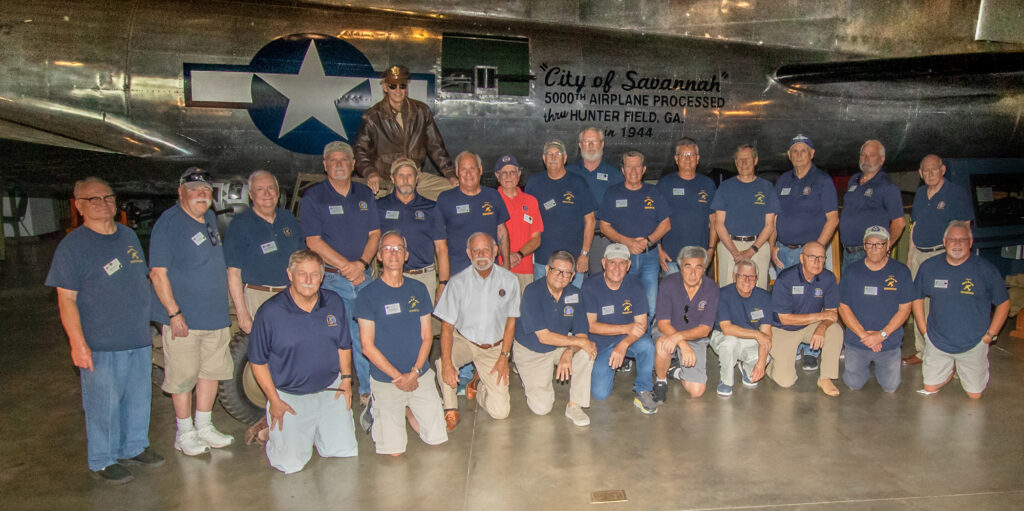
A Mighty Crew Restores History
Story by Jane
Grismer | Photography by
Leidi Lester
Inside the The
National Museum of the Mighty Eighth Air Force in Pooler sits the iconic Boeing
B-17 WWII bomber named the “City of Savannah.” Of the 12,731 B-17s that were
originally built, only 46 survive today and only five are still capable of
flying. The story that follows is about a talented group of individuals—all
volunteers—that came together and became a team. They had one goal: to restore
this aircraft nicknamed “The Flying Fortress” back to its original 1944-45
combat configuration.
This is
their story.
It was Jan.
15, 2009. That is when the B-17 bomber “City of Savannah” made its way south on
Interstate 95 with an American flag draped over both sides of its fuselage.
The plane was
en route from a warehouse behind the Steven F. Udvar-Hazy Center, an annex to the
Smithsonian Air & Space Museum near Dulles Airport in Chantilly, Virginia.
“Two decades
of storage had left the fuselage covered with an enormous amount of grit, and
there were generous amounts of what looked like packing plastic clinging all
over the aircraft,” said Jerry McLaughlin, the original project manager of the
restoration and author of the book B-17 Flying Fortress Restoration detailing
the project. “She was not a pretty sight!”
The bomber had
been gifted to the museum by the Smithsonian Institution in Washington, D.C.,
and was immediately named “City of Savannah,” after a WWII B-17 with that name.
The gift was
conditional. The agreement from the Smithsonian was that the aircraft must be
stored inside the museum, used for educational purposes and that the aircraft
would never fly.
A journey of
nearly 65 years and 600 miles for this B-17 would end at the National Museum of
the Mighty Eighth Air Force in Pooler, Georgia.
“The emotional
highlight of the day for me was my participation in the convoy escorting the
B-17 to the museum,” said Jim Grismer, the project’s deputy project manager at
the time.
“I don’t mind
saying that it was an unforgettable hoot to actually ride down I-95, five
abreast with other emergency vehicles as the convoy arrived in Pooler, exited
the interstate and then arrived at the museum with everyone’s sirens and horns
blaring.”
As the
aircraft rolled into the museum’s entrance, it was met with applause, some
tears and a lot of local media eager to capture the moment.
The “City of
Savannah” was home.
That night,
the news of the arrival of the historic aircraft was aired throughout the
region. The next day, it was on the front page of the Savannah Morning News.
Volunteers Arrive
One by one, in
the weeks that followed, volunteers showed up. Skilled volunteers with tools.
There were
welders, mechanics, electricians, painters, and engineers. Some were retired,
others were snowbirds, most were military veterans. Some worked for the
Savannah-based 165th Georgia Air National Guard Wing or local businesses such
as Gulfstream, LMI Aerospace and Flight Safety.
Every one of
these volunteers had a story. A story that became part of a collective dream.
The dream of
these volunteers was to honor the WWII veterans of the Eighth Air Force—some of
whom were literally their fathers—by restoring the B-17 to its original
pristine condition.
The
restoration of the “City of Savannah,” a Boeing B-17G Flying Fortress with a
tail number of 44-83814, is a love story. It is a dedicated project brought to
life by the volunteers who made it happen.
“In January of
2009, I opened the paper at work during my lunch hour and read the news of the
plane’s arrival,” said Bill Leining, one of the original crew of volunteers.
“I stopped
what I was doing and drove to the museum, which wasn’t too far from Flight
Safety, and went to the front desk and asked how I could help,” he recalled.
Liening, who
is now retired, was made the evening crew chief after his interview. His father
served in the Eighth Air Force as a B-17 tail gunner and flew 35 missions.
“The airplane
wasn’t in the best of shape but I couldn’t wait to get started.”
Dave Pinegar,
also a member of the original crew, learned about the plane’s arrival on local
station WTOC-TV that morning. He attended the arrival of the plane later that
day.
“LMI is very
big on community involvement,” Pinegar said. “I thought to myself that getting
connected with the B-17 project would be an easy sell to both my plant manager
and the corporate CEO, as it was a community volunteer project and
aviation-oriented.”
Dave Talleur,
a retired corporate pilot and aircraft maintenance supervisor, lived in sort-of-nearby
Sunbury, Georgia. He also became a member of the original crew.
Although
Talleur was highly skilled, he was also “the poster boy for extroverts” and
came to be the person that conversed with the visitors while his comrades
worked on the plane. His title became “the BS guy,” which he proudly wore on
his nametag, until he was promoted to deputy project manager.
It’s said that
a restoration project is never finished, but this one has come a long way from
that cold day at the museum in January 2009.
From the
arrival of the aircraft, which was too large to enter the museum, to a solid
year of cleaning the plastic residue that was used to protect the exterior of
the plane but adhered to it. Turrets were mounted, the electrical system was
installed and the interior was rebuilt and painted.
Great
partnerships were made. A connection with the Coastal Amateur Radio Society
moved beyond the project team’s expectations when they restored the B-17’s
radio room and transmitted to other sites from the airplane.
The project
relied heavily on the good work and support of Gulfstream Aerospace
Corporation, Flight Safety International and LMI Aerospace, among others.
Those
associated with the B-17 community from far and wide offered technical advice
and their input after the “City of Savannah” made its home in Pooler—especially
renowned B-17 experts Tommy Garcia and Dr. Harry Friedman.
The countless
trips made by members of the restoration crew to obtain parts, create alliances
and partner with other projects were memory-making.
Not to mention
the nose art created by a WWII nose artist Skip Shelton in 2011 and the fine
work of some of the best local metal workers in the industry.
On June 16,
2021, the final major chapter of the “City of Savannah” restoration took place
when the upper turret of the B-17 operated under power—the last of the
aircraft’s three power turrets to become operational. The bomber is the only
B-17 in the world with three working power turrets that are demonstrated to the
public.
“During this
thorough restoration to restore the B-17, we had one goal —to make it the most
accurate static display possible,” said Greg Kindred, the current project
manager. “We had no idea that we would be establishing a lasting camaraderie of
friendships and connections. The volunteers were and are truly the heart and
soul of this project.”
During the 12
years the “City of Savannah” has been under restoration, more than 200
volunteers have officially served on the team. Nine volunteers hold the honor
of serving for the entire restoration period.
“Encountering
the stuff of history is very powerful for the museum visitor, and that is the
case with the Mighty Eighth Museum’s B-17, ‘City of Savannah,’ ” said Scott
Loehr, the museum’s president and CEO.
“The aircraft
and the stories associated with the iconic B-17 enable visitors to better
understand and appreciate the Eighth Air Force and World War II history.”
This year, the
total working volunteer hours has reached nearly 75,000. Many more hours were
contributed off-site and were not recorded but were integral to the mission of
the restoration.
Every hour
volunteered was a statement of devotion to the mission by the restoration team
members.
They overcame
challenges to fulfill their dream to create a lasting symbol to honor their
fathers and grandfathers and all of the veterans who served in the Mighty
Eighth during WWII.
Since being
restored, countless WWII Eighth Air Force veterans have come to the museum with
their families and been provided the opportunity to visit inside the aircraft.
These visits have been powerful, meaningful and emotional for the veterans and
their families.
General Jimmy
Doolittle, who was a Commander of the Eighth Air Force during WWII, said it
best: “There is nothing stronger than the heart of a volunteer.” And those
words are especially true when it comes to this mighty crew of B-17 restoration
volunteers.
About The Museum
The National
Museum of the Mighty Eighth Air Force’s mission is to preserve for all
Americans the stories of courage, character and patriotism displayed by the men
and women of the Eighth Air Force from World War II to the present. The museum
is located in Pooler.
Learn More
“B-17 Flying Fortress Restoration: The Story of
a WWII Bomber’s Return to Glory in Honor of the Veterans of the Mighty Eighth
Air Force” by Jerome J. McLaughlin is available at Amazon.com and at the museum
gift shop.
More local stories

Hurricane Season Is Here

The Moment You Realize You’ve Become “The Voice in Their Head”
