
The Sound of Freedom
By Pooler Magazine··7 min read
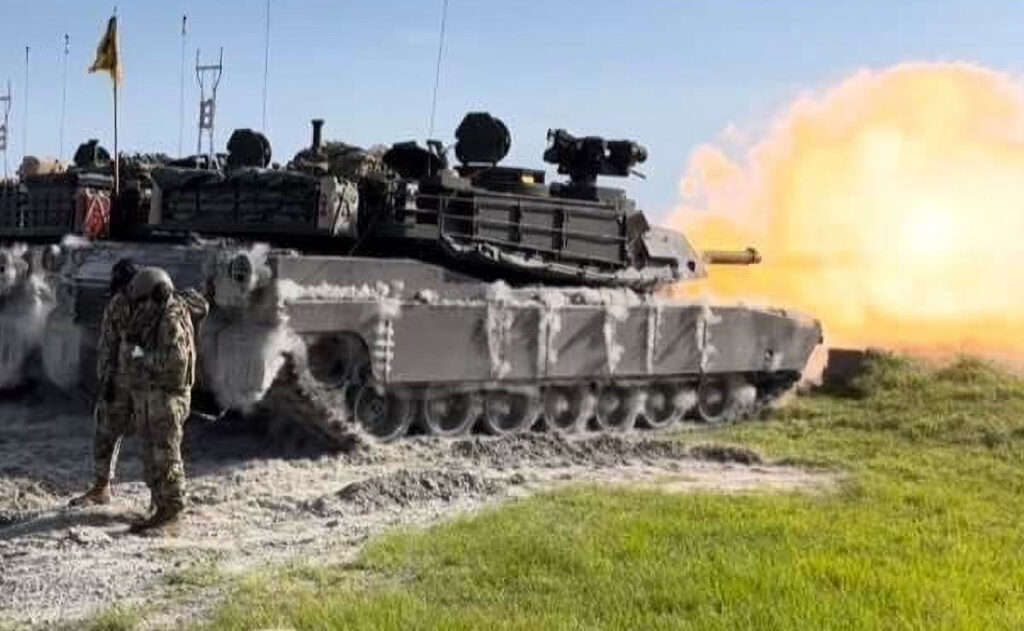
The Sound of Freedom
Story by Cindy Read
It can be
loud. Very loud. Booming loud. in fact. So loud that you wonder what on earth
is happening. For some it’s a daily nuisance, for others it’s barely noticeable
anymore. For all of us, it is what comes with living in close proximity to
several military installations. It’s often called—with gratitude—the sound of
freedom.
We Know We Are Loud
The US Army
base at Fort Stewart, Hinesville, Ga, and Hunter Army Airfield, Savannah, Ga,
generates a tremendous amount of noise, mostly from training exercises. They
say, “We know we are loud,” and often post noise advisories on their website
and social media pages. Not surprisingly, local residents often chime in on the
subject. Some recent comments:
Keep that
freedom ringing. It shakes my house a little and I love it.
When the pots
rattle on the rack in my kitchen, I know it is the sound of my country’s
readiness.
I live in the
flight path of the helicopters. Have heard them my whole life to where I don’t
even pay them any attention anymore! It’s just the sound of freedom!
Makes me sleep
better at night.
I am so glad
to hear the sound. To me it sounds like protection.
There are
always a few who are just glad to know what the heck is happening, and also a
few comments from others who have difficulty living with it.
Just going to
drop this in over at Nextdoor. Folks in some neighborhoods have never heard the
booms before and were confused.
Thanks for
this information. I really did not know what was going on.
I know we need
to be battle ready—but I hate this feeling of being shell shocked again.
So this is
what I’ve been hearing. No worries! Keep training!
I did think it
was thunder at first…Feeling quite safe and thankful knowing it’s you guys.
Hunter Army Airfield and Fort Stewart
The history of
Hunter Army Airfield is essentially the history of aviation and, more broadly,
the history of America. From its start as a small municipal airport, Savannah’s
aviation jewel has played a crucial role in our country’s defense. Knowing this
history may make an understanding of the noise and sounds emanating from there, more interesting and less invasive. There is a good reason for every boom you
hear!
1929 – Savannah Municipal Airport, located on 730
acres on the outskirts of the city, opens.
1940 – The airport is renamed Hunter Municipal
Airfield, in honor of Lieutenant Colonel Frank O’Driscoll Hunter, a native of
Savannah and a World War I flying ace. (He retires as a Major General in 1946)
1941 – The United States Army Air Corps builds the
Savannah Army Air Base at Hunter Municipal Airfield. After the attack at Pearl
Harbor, Savannah AAB becomes a base for several Antisubmarine groups and
squadrons of I Bomber Command and later Army Air Forces Antisubmarine Command
with a mission to patrol the Atlantic coast, locate and attack German U-boats.
After the war the airfield is returned to the City of Savannah.
1950 – The City of Savannah swaps the airfield with
the United States Air Force Strategic Air Command, along with 3,500 acres of
additional land, for Chatham Air Force Base. The 2nd Bomb Group moves to the
base, now reopened as Hunter Air Force Base.
1967 – The Air Force closes the base, and the Army
assumes control. The U.S. Army Flight Training Center is developed in
conjunction with the flight training conducted at Fort Stewart. The helicopter
pilot training is rapidly accelerated, and pilots are trained and sent to duty
all over the world, with a substantial percentage seeing active duty in
Vietnam.
1973 – HAAF is deactivated, but reopens in 1975,
serving as a support facility for the 24th Infantry Division (Mechanized), at
Fort Stewart.
1974 – 1st Battalion, 75th Infantry Regiment
(Ranger), parachutes into Fort Stewart where the battalion is stationed until
moving to HAAF in 1978.
Today HAAF is
a military airfield and subordinate installation to Fort Stewart, which is the
largest Army installation east of the Mississippi River, covering 280,000
acres. HAAF has the Army’s longest runway east of the Mississippi River and an
aircraft parking area that is more than 350 acres. This space allows the 3rd
Infantry Division from Fort Stewart to efficiently deploy soldiers and cargo
worldwide. It is an essential part of our nation’s defense.
“While it is
frustrating and at times down right hard to sleep, I am grateful for our
soldiers and am willing to endure the noise so they can be properly trained and
safe.”
Why is it SO LOUD?
Yes, it can
get pretty loud. Noise from Fort Stewart and HAAF can be heard many miles away.
Here’s a few reasons why:
- The artillery impact area supports
fixed wing aircraft from other services dropping up to 1000 pound bombs and
helicopter gunships firing rockets and guns - Ranges are active at least 324 days a
year - A busy day can have 20 to 30 ranges
active at one time - The training area has more than 70
active ranges - Munitions fired vary from small 9 mm
bullets to large, easily heard 155mm artillery rounds - 12 million rounds are fired there
annually - Dense cloud cover and cold
temperatures can make sound travel further - They train year-round, and at all
hours of the night and day. Doing so ensures readiness when they deploy.
And there are
many people coming and going. Fort Stewart and HAAF serve about 22,310
Soldiers, 42,957 family members, 4,500 civilians, 19,000 retirees, and National
Guard soldiers. At the air base there are approximately 5,500 soldiers, airmen,
coast guardsmen and Marines on station. Lots going on!
Other Area Noisemakers
There are
several other airports and military installations nearby that also generate
noise. One is the Savannah Air National Guard Base, 165th Airlift Wing is
located at Savannah/Hilton Head International Airport.
The165th AW,
which currently flies the C-130H cargo aircraft, provides air transport for
airborne forces, their equipment, and supplies with delivery by airdrop or
airland, and to provide strategic airlift of personnel, equipment, and
supplies.
Coast GuardAir StationSavannah is also located on HAAF. Equipped with MH-65 Dolphin
helicopters, Air Station Savannah provides Search & Rescue (SAR) coverage
24 hours a day, 365 days a year, for 450 miles of shoreline from the northern
border of South Carlina to Melbourne, Florida, averaging more than 250 SAR
cases a year.
Within a fifty
mile radius you will find:
- Savannah/Hilton Head International
Airport in Savannah, GA—8 miles - MidCoast Regional Airport at Wright
Army Airfield, GA—25 miles - Hilton Head Airport at Hilton Head
Island, SC—30 miles - Marine Corps Air Station Beaufort in
Beaufort, SC—40 miles
The Marne Report
Produced by
the Fort Stewart Public Affairs Office, the Marne Report is a podcast that
explores what’s going on at Fort Stewart-Hunter Army Airfield.
On a recent
episode “Hear Comes the Boom” (March 4, 2022) host Kevin Larson talked with Lt.
Col Scott Stephens,1-64 Armor Battalion commander, and Amanda Price,
Directorate of Public Works, about training noise and why soldiers have to
train like they fight, especially in conditions with low or no light.
Thank a Veteran
Training is an
essential component at any military installation. Our Armed Forces need to
recreate ‘real life’ scenarios, day and night, seven days a week, in order to
be completely prepared for any contingency. Every loud boom is a crucial
element of the mission to keep our Armed Forces service men and women—and our
country—safe. And overwhelmingly our residents appreciate it.
We LOVE the
sound of freedom! I don’t care what time of the night. These folks HAVE MY
BACK!
It’s a small
noise compared to the sacrifice that the service members have made.
Let freedom
ring!
For More Information:
Those who have
concerns about the noise from HAAF / Fort Stewart can call the Fort Stewart
Public Affairs Office at 912.435.9879. Their office is open Monday through
Friday 7:30 a.m. to 4 p.m.
More local stories

Hurricane Season Is Here

The Moment You Realize You’ve Become “The Voice in Their Head”
