
Savannah National Wildlife Refuge: A National Treasure
By Pooler Magazine··5 min read
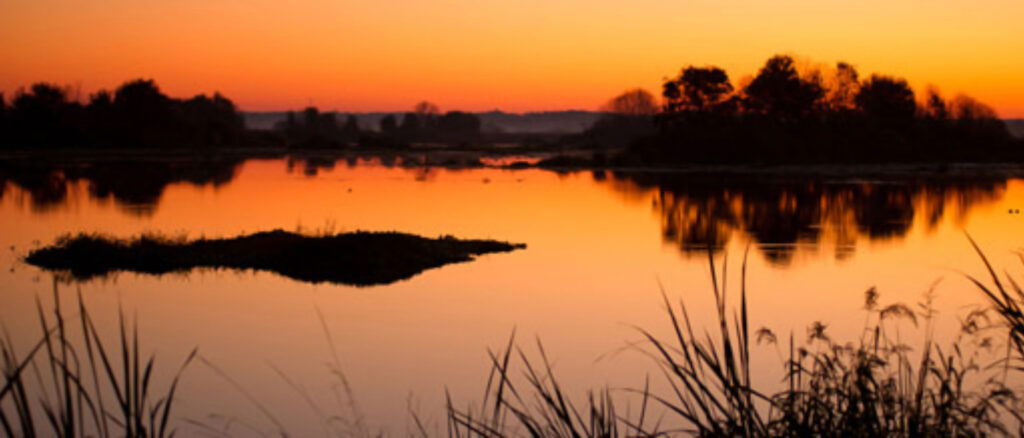
Story by Cindy
Reid
One of our
true local treasures is right at our doorstep. Our Savannah National Wildlife
Refuge (NWR) is home to an incredible amount of wildlife, plant diversity and
local history within its 30,000 acres, and it is convenient and free to visit!
Spread across two states—Chatham and Effingham counties in Georgia and Jasper
County in South Carolina—the refuge is a popular spot for hikers, bird watchers
and nature photographers.
The Savannah
NWR contains a multitude of habitats such as freshwater marshes, tidal rivers
and creeks, and bottomland hardwoods. The hardwood trees are primarily cypress,
gum, and maple—trees not found in most areas anymore.
Because the
Savannah River and other smaller rivers run through the refuge, it is able to
support an enormous array of wildlife. Deer, bobcats, fox, otters and
alligators all make it their home. Birders come from far and wide to catch
sight of the huge variety of resident and migratory birds that populate the
refuge.
In addition to
being a wildlife habitat, the Savannah NWR is a significant historical location
with 36 historic and prehistoric archeological sites that have been located and
inventoried. For thousands of years, Native Americans both occupied and passed
through the area and by the mid-18th century, rice planters were farming much
of the land. The old rice levees—built by hand—form the basis for the current
impoundment dikes that are an important part of the eco system today. Remnants
of the original structures can still be seen in some places.
National Wildlife Refuge Designation
The Savannah
NWR was originally established in 1927 as a preserve and breeding ground for
native birds. In 1931, another 207 acres were added to the refuge and it was
named the Savannah River Wildlife Refuge. In 1936 an additional 6,527 acres
were added to the refuge and on July 25, 1940, it was renamed the Savannah
National Wildlife Refuge.
As with the
National Park system, the first National Wildlife Refuge was established in
1903 by President Theodore Roosevelt. An ardent conservationist, he would go on
to create 50 more federal bird reserves and four national game preserves within
the refuge system.
Refuges are
not the same as national or state parks. They are designated conservation areas
with minimal development used mainly for wildlife observation, photography,
education, hunting and fishing. Camping is not permitted at refuges. Although
refuges are primarily ‘left alone’ refuge management will step in to help
restore natural habitats if necessary.
The Savannah
NWR is one of seven refuges administered by the Savannah Coastal Refuges
Complex, headquartered in Hardeeville SC. The seven refuges span a 100-mile
stretch of coastline and total 57,226 acres.
Wildlife Abound
The Savannah
NWR is birders paradise. As a safe fly-over and rest stop during spring and
fall bird migration, the Savannah NWR is an important link in the chain of
wildlife refuges along the Atlantic Flyway. It provides nesting habitat for
wood ducks, purple gallinules, bald eagles, anhingas, and swallow-tailed kites,
among many others. Wood Storks, federally endangered, forage here. Red-coakaded
Woodpeckers and Least Terns, also endangered, nest here. Thousands of
waterfowl, shorebirds, raptors, and colonial waterbirds use the refuge
year-round and seasonally. You truly never know what bird you may see here!
The American
alligator lives in the refuge wetlands and although they are considered
dangerous, they typically pose no serious threat if left alone. It is a
violation of state and federal law to feed or harass alligators in any way.
Bobcats have
been spotted throughout the year at various spots along the refuge’s wildlife
drive and adjacent trails. Bobcats are elusive and nocturnal and therefore
rarely spotted by humans.
Impoundment Improvement
Managed freshwater
impoundments are tidal freshwater marshes that have been diked and
“impounded” in order to grow vegetation through water control. The
impoundments at Savannah NWR are maintained for the purpose of providing
habitats for waterfowl through the winter as they migrate.
At the refuge,
phase one of the repair and renovation of the 3,000-acre freshwater impoundment
system is reaching completion, and in September 2021, the second and more
extensive part will begin. Specific improvements include elevating all dikes/levees
surrounding the impoundments, deepening the perimeter and interior ditches
within the impoundments, and replacing water control structures.
These measures
are necessary to continue to provide vital habitat for birds and the other
species that benefit from the impoundments. The elevated dikes and deeper
ditches also will also provide better wildlife viewing for visitors.
Upcoming Closures
Due to phase 2
of the repair and renovation plan, the Laurel Hill Wildlife Drive and all
trails adjacent to the freshwater impoundment system that runs along both sides
of SC 170 will be closed beginning September 8, 2021, until further notice.
Visitors should expect closures for a period of not less than one year, and
maybe two. Closed areas will be completely off-limits to all visitors (no foot,
bicycle, or vehicle traffic).
As of this
time, the Savannah National Wildlife Refuge Visitor Center in Hardeeville, SC,
is closed due to the COVID-19 health emergency. However, many other areas on
the refuge remain open, such as Kingfisher Pond and adjacent trails, the
Solomon Tract, and the Visitor Center trails. In addition, Pinckney Island and
Harris Neck National Wildlife Refuges are open for normal visitation. n
(843) 784-2468
Fast Facts
- The National Wildlife Refuge System is
managed by the U.S. Fish and Wildlife Service. - Pelican Island National Wildlife
Refuge, along Florida’s Atlantic coast, was the first unit of what would become
the National Wildlife Refuge System. - At the Savannah NWR, 15,395 acres are
in Georgia and 15,263 acres are in South Carolina. - The recreational activities at
Savannah NWR include hiking, bicycling, wildlife viewing, photography, fishing,
and hunting. - There are two primary public use areas
of the refuge that visitors can drive to: The Visitor Center, located on U.S.
Hwy 17, approximately 7 miles north of downtown Savannah, GA, and 7 miles south
of Hardeeville, SC, and the Laurel Hill Wildlife Drive, located on
GA-25/SC-170, approximately one mile east of Port Wentworth, GA. - Open during daylight hours 7 days a
week
More local stories

Hurricane Season Is Here

The Moment You Realize You’ve Become “The Voice in Their Head”
